Published: Sunday 9th January 2022
Before entering the world of TV advertising it is important to align your business with a company which specialises in the entire TV commercial planning, production, media buying and TV advertising campaign management process, all you should need to worry about is the development of a great idea and an effective way to communicate the message to a TV viewing audience.
TV advertising can only be effective if you have a clear understanding of what you are trying to achieve. Big brands (like Amazon and McDonalds for example) will advertise to build brand awareness. They tend to focus their TV commercial advertising campaigns less on particular products and more on the positive emotions a customer should feel by engaging with their brand. Most other companies tend to run TV commercials to promote and sell products, services or experiences, so it is important to get the visuals and messaging right to create the desired effect of generating sales.
It is worth mentioning that running a TV campaign doesn’t guarantee a certain amount of sales. It can with a large enough budget guarantee that your advert will reach millions of people but not necessarily that your advert will be viewed by those people in its entirety, that the message will be understood or even remembered. The good news is there are lots that can be done to make sure we give ourselves the best chance of doing all these things.
Plan Your Ad
It is important to adequately plan an advertising campaign and incorporate some strategic thinking. Plan a number of brainstorming sessions and develop the ideas which will resonate the most with your target audience. If you can afford the time and resources it is also beneficial to employ the services of a focus group to help whittle down these ideas and form an outline of a potential advert.
The Fundamentals of any TV advert
First and foremost it is important to use the language (coupled with the correct visuals) which appeal to your target audience. Following this foundation an effective TV advert has to be:-
- Catchy – Memorable and difficult to ignore
- Punchy – Brief but effective
- Engaging – Grab the attention of your target audience
- Informative – Contain the correct message
- Effective – Deliver the desired effect (encourage your customers to take the desired action)
You have launched an advert on TV and paid for a primetime ad spot (during either high-audience day time TV show, a popular TV series or a long-running soap) this does not guarantee the audience you are reaching are your target audience (regardless of the numbers which the TV viewership data will provide for you).
Modern technology (apparent in almost every household) now allows you to record TV shows and skip through adverts. Most people believe that the rise of handheld devices has been bad for TV. The exact opposite has happened with over 70% of people interacting with a hand held device within 15 minutes of seeing an advert and searching for the relevant website. Success! The great news is that a well put together TV campaign can really benefit other parts of your marketing mix and even reduce costs in other areas such as Google AdWords etc.
There have been many great adverts over the years – memorable adverts, emotional adverts (mostly around Christmas time), impactful adverts and crazy over the top adverts, all unique in their own right. Coca- Cola, John Lewis and Money Supermarket are all good examples. Whatever the angle you decide to go for, just make sure it will have the desired effect on your target audience. It is important from inception to allocate budget for both the creation of the advert as well as budget to purchase the airtime.
Write A Compelling Script
Now that you have the ideas from your brainstorming sessions and focus groups it is time to turn your creativity (or employ the services of a creative agency) towards creating a compelling script for your advert. As previously mentioned it is essential to understand what appeals to your audience and not necessarily what you personally like (as you may not be your target audience for your product or service), for example your target audience may find a humorous advert more appealing than one which is very technical and goes into the science behind your product or service. They may find an advert which quickly runs over the key benefits of your product in a fun manner really makes your advert stand out from the other companies selling similar products on TV.
There was an awesome advert created on a budget by founder and CEO of “Dollar Shave Club” (it is well worth looking up) and it is unquestionably the advert which has delivered the most return on investment of all time. The advert was created on a tight budget and featured the founder of the brand walking through various parts of his operation with hilarious elements throughout. It was short, snappy, memorable and funny – it hammered home the message that you can get shaving razor blades delivered to your house for a dollar, hassle free every month. It was truly genius.
This style of advert had huge appeal with the target audience of the brand because they were mainly people who didn’t want to worry about buying razors to shave every month, they were people who weren’t too serious and didn’t have the time to buy razors or didn’t see that as a priority in their lives. Their target audience was a care-free generation, which humour would appeal more towards, more so than a technical and boring advert highlighting the science behind the razor blades and why they were better than other razors blades on the market.
So in short, make your advert for your audience and not for you. Put their needs first (prioritising the elements of your product or service which would most appeal to them). Make the script engaging, getting the point across quickly and clearly, and if possible re-enforcing the “call to action” at the end. A successful script should incorporate the following elements in this order:-
- Introduction – brief overview of who you are and what you’re selling
- Call to action – key benefits of the product
- Memorable segment – this can be the humour element we discussed earlier (as long as this overarching style appeals the most to your target audience)*
- Call to action – where to go to get the product (website, phone line or high street store)
A Memorable segment can be a theme which extends across the entire advert, such as the humour of the Dollar Shave Club advert.
Make sure that you refine the script to perfectly fit within the allotted time frame (this can also be achieved by working with a film production company). TV adverts tend to adhere to the standard length which is 30 seconds long. However, ads can also be 10 seconds, 20 seconds, 40 seconds, 60 seconds or even longer. Most ad breaks range from 2.5 minutes to 3.5 minutes long, and an ad must be a multiple of 10 seconds to fit within the allotted time frame of the ad break.
The length of your ad should depend on the following factors:
- How much time is required to tell your story
- How complex is the message that you wish to convey to your audience? How much time is required to get your point(s) across
- Are you a new business or are people (your target audience) familiar with your brand? Is this your first time on TV?
- Your budget (for creating the advert and also for airtime)
It is normal for any company undertaking this process to create an initial ad which is of a longer length and cut this down over time (once viewers have become familiar with the brand and the ad message).
If it is your first time on TV then it is important to launch with an advert which doesn’t rely totally on the visuals, the voiceover should be able to communicate the message on its own. A good technique to employ before launching such an advert is to listen to the audio in situ and see if it is as effective at getting the message across without the aid of the visuals.
Ads can do so much more than just sell products or services, they can educate, entertain, provoke thought, drive people to act and also inspire. Make sure your ad is one which can cause an emotional response.
Hire A Film Production Company
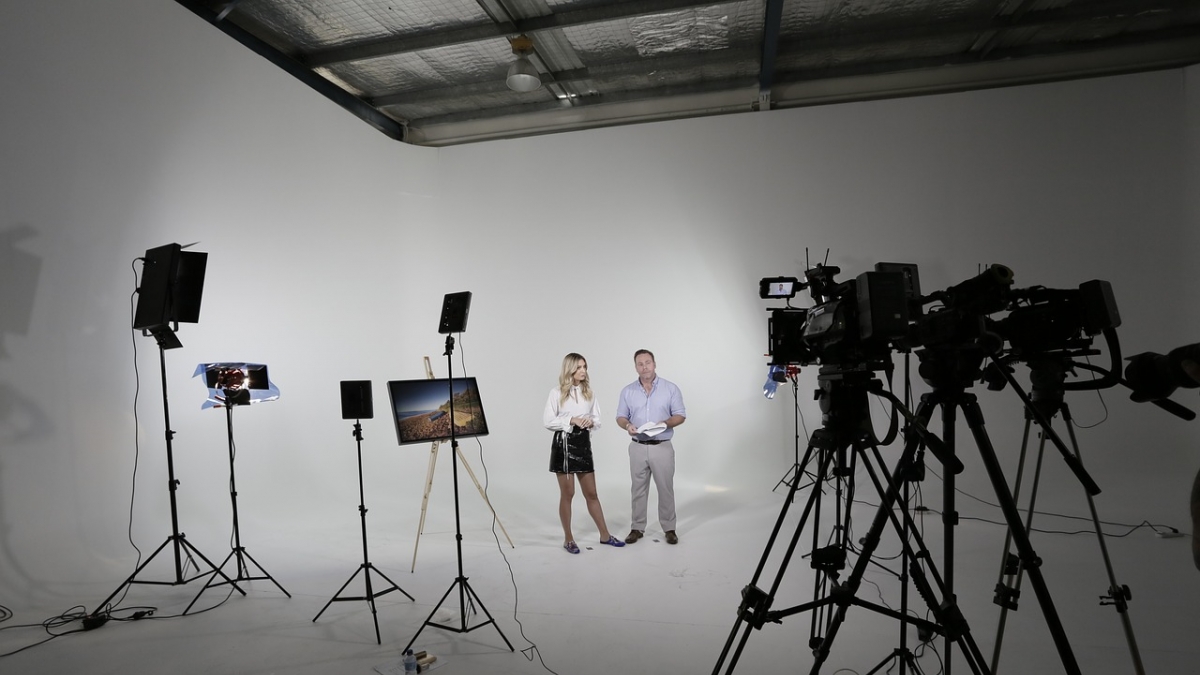
Now that you have a script (this doesn’t have to be a finalised version) it is time to hire the assistance of a TV film production company with Clearcast experience. A production company can help to refine the script so that it is TV ready and also plot the best path for your commercial (in terms of whether it requires just the product, animation, actors or all of the above). A word of advice, make sure the production company that you use is able to show you a portfolio of their adverts and discuss their experience of Clearcast with you.
Film production companies can provide you with more than just the filming, they can source actors and locations if necessary to deliver the perfect experience. Actors can be useful for communicating your message to your target audience, especially if the actors look and behave like your target audience. This is essential for generating sales and interest because your audience can really relate to the actors in your advert as if they were themselves using your product or service. Great locations can also be a useful facet to your TV advert, whether it’s an outdoor location, an interior of a house or a shop or warehouse, it is important to have the correct backdrop to your commercial.
A film production company will help you plan your shots so that you can maximise the products or services which can be showcased within the allotted time frame. It is worth remembering that 30 seconds is not a long time. To get the best and most important features outlined/visible as soon as possible and emphasise the benefits of using your product or service (depending on what you are showcasing, sometimes it is worth comparing and contrasting rival products or services without providing free advertising for your competitors within your advert). Please don’t worry a good production company will help you with all of this.
Following the filming of the commercial, the film production company will also deal with the post production features, this includes all elements of editing, voiceovers and even the implementation of special effects and/or animations where required.
The final edit of your commercial must conform to the allotted time exactly. Any ad which runs over the allotted time (even by a fraction of a second) may be trimmed or cleared. Clearcast is a non-governmental organisation, owned by the four major UK commercial broadcasters ( ITV, Channel 4, Sky and Warner Media), they are responsible for approving most British television advertising. Adverts cannot be offensive, misleading or harmful and so it is the responsibility of Clearcast to ensure that all adverts on TV adhere to these standards. If an advert is submitted to Clearcast is rejected they will provide feedback wherever possible.
Plan An Advert Schedule Strategy
TV advertising is sold using a metric known as cost per thousand (CPT). So you will be charged per 1,000 views, impacts or impressions. Popular TV shows such as Lorraine (daytime ITV) can command the highest fees to air an advert during their commercial breaks, this is due to the vast number of viewers watching the programme.
The data used to measure the number of people viewing TV programmes is provided by BARB (which stands for Broadcaster’s Audience Research Board). BARB is owned by BBC, ITV, Channel 4, Channel 5, BSkyB and the IPA (Institute of Practitioners in Advertising) and is proficient at measuring both programme and advertising performance. The reason why BARB is such a trusted source of information within the industry is because they measure actual behaviour, using data obtained from a well-built active sample of people which represent the 26 million viewing households in the UK.
To provide an idea of cost, an advert spot during prime day time TV shows like Lorraine, Loose Women or Good Morning Britain can be anywhere in the region of between £3,000 - £5,000. Peak time slots on the popular channels can cost upwards of £10,000 (this is based on a national TV ad campaign). On the flipside you can also advertise on smaller channels (during what is regarded as off-peak times) for as little as £100. It is also worth noting that TV adverts can now be delivered locally, further reducing the cost of a campaign. Scheduling your advert (even during a TV show such as Coronation Street – which is in peak time, and one of the most popular shows on ITV) can cost you a fraction of the anticipated cost if you were to run as a “localised” ad campaign (this is known as Geo-targeted ads).
It is also worth noting that the cost to serve your advert varies not only because of the time of day which your advert airs, the programme during which your ad airs but also on the position during the ad break at which your advert airs. To provide an idea of the variance – the premium positions during the ad break are the first, the second and the final position. This is because the attention of the audience is at its most heightened during these time slots. When media buying (the airtime for the ad slots) a campaign is guaranteed an even spread of positions during a standard campaign. It is possible to negotiate higher positions in breaks (or PIBs) than the standard campaign allocation (if for example your ad is split into two parts which will be shown in the first and final positions during the ad break).
There has never been a better time to advertise on TV than now, this is due to the level of accuracy and measurable data available to ensure that your ad campaign achieves the best results.
Historical data incorporated a number of assumptions (such as household size, the data also had the tendency to lack any demographic information or tangible statistics to validate that the individuals viewing your advert were within your target audience). Nowadays we have the data from BARB, coupled with useful information from various other sources (such as Experian, SKY and Virgin accounts to name a few) and it is possible to build a profile and serve ads to people who are in-market and within your target audience.
This is known as advanced TV advertising providing more flexible TV ad solutions for businesses of all sizes. TV ads are now more dynamic, one-to-one ad delivery and first party data driven ad serving.
It is now possible (with the incorporation of modern technology) to have two neighbours watching the same programme to be served different ads during the same ad break based on their household data. One household could consist of first time parents and so an advert on “baby products” would appeal to them, whereas their neighbour would be subjected to an advert for home improvements as they are in-market to renovate their kitchen and bathroom.
Working with a media buying company with strong relationships across all the channels and major platforms is the best way to get the best price for your TV ad campaign. Not only will they be able to negotiate the best price for you but also secure the best ad slots and provide the strategy which will see your advert reach your target audience to deliver maximum ROI.